The Medical Treatment Brochure Template Set as a Professional Workflow Catalyst
For professionals across healthcare, marketing, and education, the need to communicate complex medical information clearly and effectively is a constant challenge. Whether you are a clinic manager introducing a new service, a public health educator running a campaign, or a freelance designer creating materials for a client, the core task remains: to transform data, procedures, and benefits into digestible, trustworthy content for patients and the public. This is where a specialized Medical Treatment Brochure Template Set transcends being merely a collection of graphics and becomes a strategic asset within a broader communication workflow.
Beyond a Single Design: A System for Consistent Communication
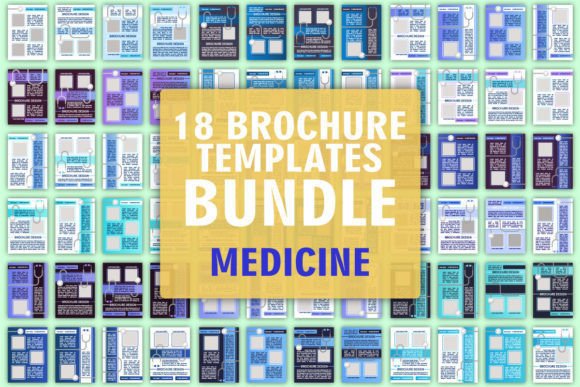
A Medical Treatment Brochure Template Set is not a one-off flyer. It is a coordinated system of design elements—layouts, icon sets, typography structures, and color palettes—built specifically for the medical and wellness sector. The value lies in its universality. It provides the foundational visual framework, while the "empty copy space" is the intentional void where your specific expertise and information come to life. This separation of design and content is crucial for workflow efficiency. It allows the subject matter expert—the doctor, the administrator, the educator—to focus entirely on crafting accurate, helpful text, while the visual consistency and professional polish are handled reliably by the template.
Consider a typical workflow: a multi-departmental hospital needs to produce brochures for five different new outpatient treatments. Without a template set, each project might start from scratch, involving multiple rounds of design briefs, approvals, and potential visual inconsistency. With a pre-made, editable set, the process shifts. The initial step becomes selecting the appropriate template variation from the collection, then populating the designated text areas with the tailored medical copy. This ensures that every brochure, while containing unique treatment information, shares a common, recognizable brand language that reinforces institutional trust and authority.
Integration with Digital and Physical Asset Management
The practical integration of these templates into your workflow hinges on their technical specifications and how they interact with other tools. A professional set offering file formats like EPS, SVG, AI, PNG, and JPEG is designed for compatibility. The vector formats (EPS, SVG, AI) are essential for scalability and professional editing in software like Adobe Illustrator or Affinity Designer, allowing in-house designers to adjust layouts or customize icons without quality loss. The raster formats (PNG, JPEG) are immediately usable for quick placements in word processors, presentation software, or basic publishing tools, empowering non-designers to assemble drafts.
This versatility supports a staged workflow. A marketing coordinator might use a PNG layout in a collaborative online document to gather copy from medical staff. Once finalized, the AI file is passed to the design department for final branding tweaks and high-resolution output. Furthermore, these templates don't exist in isolation. They become part of a larger Premade Corporate Reports Collection or asset library. A clinic might use the brochure templates for patient-facing materials, while utilizing report templates from the same collection for internal outcome summaries, creating a unified visual identity across internal and external communication channels.
Practical Implementation: From Template to Finished Product
Adopting a template set requires a small amount of preparation to maximize long-term efficiency. First, assess your primary editing tools. If your team works mainly in Canva or similar online platforms, ensure the template set includes compatible formats (like PNG with transparent backgrounds). For Adobe-centric teams, the AI or EPS files are key. Second, establish a simple organizational system. Store the master template files in a shared, clearly labeled digital folder, accompanied by a basic style guide noting the intended color codes and font usage.
A workflow example for a freelance health blogger might look like this:
- Preparation: Subscribe to a service offering new graphics weekly, ensuring access to fresh, contemporary medical visuals.
- Execution: For an article on a new diabetes management program, select a brochure template with a clear "Benefits & Procedures" layout from the downloaded set.
- Integration: Edit the vector template in Illustrator to match the blog's accent colors, then place the finished graphic into the blog post draft. Use the same template's icon set to create additional social media snippets.
- Quality Control: The template's predefined layout ensures critical information hierarchy—headline, sub-points, call-to-action—is maintained, reducing the risk of design errors that could obscure the medical message.
This process-oriented use eliminates guesswork from the design phase, allowing the creator to invest time in research and writing.
Enhancing Usability and Long-Term Value
The usability of a high-quality Medical Treatment Brochure Template Set is measured by how little it obstructs the primary task: communication. Well-designed templates have logically grouped text boxes, intuitive placeholder labels for "Treatment Overview," "Patient Guidelines," or "FAQ," and a balanced use of imagery that supports without distracting. This structure acts as a content guide, prompting the author to cover essential informational categories and improving the completeness of the final brochure.
For long-term use, the modular nature of such a collection is its greatest strength. Over a year, a community health center might deploy different templates from the same set for vaccination drives, mental wellness workshops, and nutritional advice campaigns. Because all materials stem from the same design root, they build cumulative visual recognition in the community. The center's audience begins to associate that specific look and feel with trustworthy health information, a powerful outcome that standalone, disparate designs cannot achieve.
Key Considerations for Smooth Integration
To seamlessly weave these templates into your routine, consider these practical observations:
- Content-First Approach: Always draft the medical text independently before touching the design template. This ensures the copy is accurate and complete, and you then simply fit it into the layout, rather than forcing the layout to stretch for inadequate content.
- Collaboration Protocol: When working in teams, define who "owns" the master template files and who has editing permissions. Use the editable layers in AI or SVG files to create different versions (e.g., "Spanish-language version," "print-optimized version") without corrupting the original.
- Output Matching: Align the template choice with your final output. A "vertical poster template" from the set is ideal for clinic wall displays or event booths, while a more text-dense brochure layout is suited for detailed handouts or digital PDF downloads.
Ultimately, a Medical Treatment Brochure Template Set functions as a workflow accelerator and a quality standardizer. It sits at the intersection of medical expertise and design execution, providing the structured canvas that allows professionals to focus their energy where it matters most: on creating clear, helpful, and authoritative health information for their audience. By reducing the friction of the design process, it enables faster project turnaround, consistent brand presentation, and a more efficient allocation of resources—from the solo entrepreneur to the large corporate health network.