Modern Banking Communication: Evaluating Template Sets for Professional Content
In the banking and financial services sector, clear, trustworthy communication is a cornerstone of client relationships and regulatory compliance. Producing this material consistently—from informative brochures to annual reports—requires significant design resources. This is where specialized template collections, such as a Banking Support Information Brochure Set, enter the conversation as a potential solution for marketing teams, compliance officers, and financial advisors.
Understanding the Banking Support Information Brochure Set
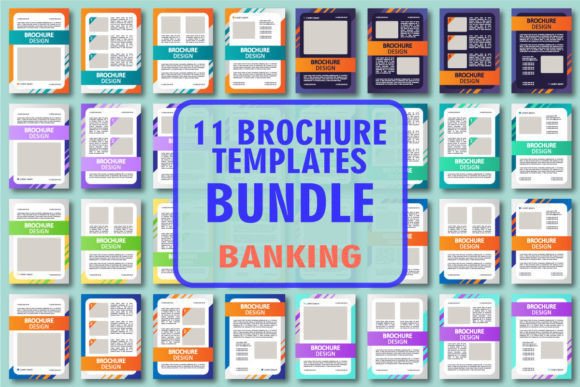
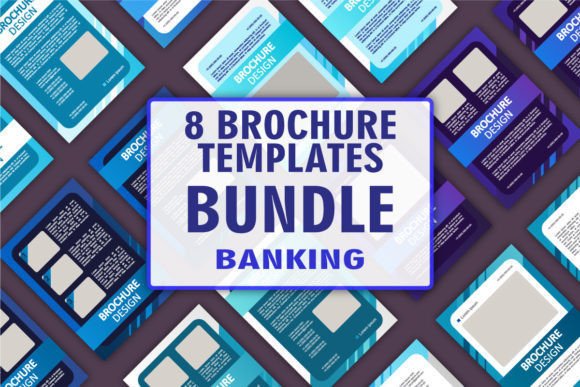
A Banking Support Information Brochure Set is not simply a folder of generic graphics. It is a curated collection of design assets specifically tailored for the context and requirements of financial institutions. Typically, such a set includes templates for brochures, flyers, posters, and corporate report layouts. The key distinction lies in its foundational design language: it incorporates elements like data tables for interest rates, infographic styles for explaining processes like loan approvals, icons representing security and growth, and color palettes that align with professional, corporate branding.
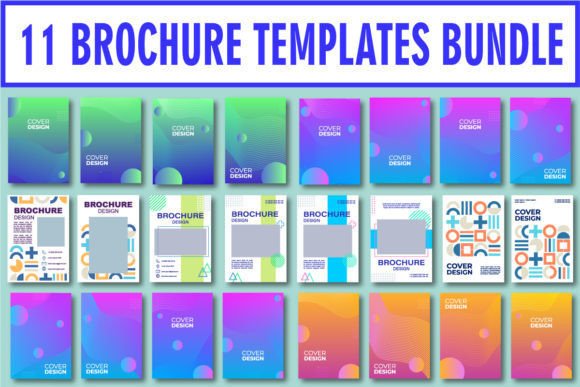
The technical offering is often robust. As noted in typical product descriptions, files are provided in multiple formats including EPS, SVG, AI, PNG, and JPEG. This multi-format approach is crucial. Vector formats (EPS, SVG, AI) allow for unlimited scaling and deep customization without quality loss, enabling designers to alter every element. The raster formats (PNG, JPEG) provide ready-to-use options for quick digital deployment. The inclusion of a vertical poster template set with empty copy space and a premade corporate reports collection speaks to a holistic approach, aiming to cover several common needs within one package.
Comparing This Approach with Other Content Creation Paths
When evaluating how to produce banking support materials, professionals generally consider three primary paths: full custom design from scratch, using a generalized template marketplace, or investing in a niche, sector-specific template set like a Banking Support Information Brochure Set. Each has distinct trade-offs.
Full custom design, handled by an in-house or contracted graphic designer, offers maximum flexibility and brand uniqueness. Every infographic, layout, and icon can be crafted to your exact specification. The strength is a perfect fit; the trade-off is significant time and cost. This path is best suited for large institutions with ongoing, high-volume needs and dedicated marketing budgets.
Generalized template marketplaces offer vast libraries of styles at often lower costs. You might find a brochure template with a "corporate" feel. However, the limitation is relevance. A template designed for a tech startup rarely has the appropriate visual metaphors, data visualization styles, or regulatory tone needed for a savings product brochure or a privacy policy flyer. The adaptation work can be substantial, potentially negating the time-saving benefit.
The Niche Template Set: Strengths and Decision Factors
The Banking Support Information Brochure Set positions itself between these options. Its core strength is pre-validated context. The templates are built with the financial sector in mind. This means a designer or even a knowledgeable marketing officer spends less time adjusting the fundamental structure to feel "bank-like." The customizable vector elements and editable flyer paper pages are designed to be modified, but from a starting point that is already appropriate.
Consider a practical example: creating a client brochure explaining a new mortgage product. With a generic template, you might spend hours sourcing or creating icons for "fixed rate," "application steps," and "credit assessment." A specialized banking set likely includes these icons in its library, and the infographic templates are already structured to present multi-step processes clearly. The time savings are real, but only if the set's visual style aligns with your institution's existing brand guidelines. This is a key decision factor: can the template's color schemes, fonts, and graphic style be efficiently adapted to match your brand identity?
When This Resource Is the Right Fit—And When It Might Not Be
A Banking Support Information Brochure Set is often a strong fit for specific scenarios. For smaller banks, credit unions, or independent financial advisors with limited in-house design capacity, it provides a professional baseline that would be costly to develop independently. For larger organizations with regional branches needing to produce localized versions of national materials, it can serve as a consistent, master template that branch managers can safely customize.
It also suits projects requiring rapid turnaround. Regulatory updates, new product launches, or seasonal campaign materials often need to be published quickly. Having a library of editable, sector-specific assets can significantly accelerate this process compared to starting from a blank canvas or sifting through unrelated generic templates.
However, there are situations where an alternative option may be necessary. If your institution has a highly unique, avant-garde brand identity that deliberately breaks from traditional financial aesthetics, a pre-built banking set may be too restrictive. The very qualities that make it efficient for most—its pre-conceived notions of "banking style"—could make it a poor starting point. Similarly, for projects requiring entirely novel forms of data visualization or interactive digital content, a static template set, even in vector format, may not provide the required foundation. In these cases, the path of full custom design remains preferable.
Evaluating Quality and Long-Term Value
p>When comparing specific offerings within the category of banking template sets, look beyond the number of files. Assess the depth of customization possible. A set offering only flat JPEGs is essentially a collection of pictures; you cannot change the core structure. A set providing EPS and AI files for vector brochures infographics templates implies true adaptability. The promise of "new graphics every week" and a subscription model suggests ongoing value, but requires evaluation. Does the subscription add more banking-specific content, or does it drift into generalized graphics? The utility depends on your ongoing need for fresh, yet still context-relevant, assets.The practical comparison is not just about the product, but about your internal process. Implementing any template set requires someone with basic competency in design software (like Adobe Illustrator to use AI files). Without that, the editable potential is locked. For teams without such skills, a service that offers customized design based on templates, or even a different solution like a dedicated online design platform with sector-specific modules, might offer a better balance of professionalism and usability.
Making an Informed Decision for Your Communication Needs
Choosing resources for professional content creation is about aligning tools with your operational realities. A Banking Support Information Brochure Set represents a tool optimized for a particular industry. Its value is proportionality: it offers more relevance than a generic marketplace, and more efficiency than full custom design, but within a defined scope.
Before committing, map your typical projects. How often do you produce client-facing informational brochures? Do you release formal corporate reports? Is there a frequent need for lobby posters or educational flyers? If these tasks are common, and your brand falls within the broad spectrum of traditional financial services aesthetics, a specialized set can streamline your workflow considerably. Evaluate the provided file formats against your team's software skills, and consider whether the design style can be molded to your specific branding without excessive effort.
Ultimately, the goal is consistent, clear, and compliant communication. Whether a Banking Support Information Brochure Set is the right vehicle depends on how well its pre-built structure matches your destination. For many in the financial world, it provides a valuable shortcut on the road to professional content, allowing teams to focus less on foundational design and more on the crucial information their clients need to understand.