Streamlining Talent Acquisition with Professional Design Templates
In the competitive landscape of talent acquisition, the clarity and professionalism of your communication materials can significantly impact your success. The process of employee searching involves multiple touchpoints with potential candidates, from initial outreach to detailed role explanations. For many organizations, creating visually cohesive and informative materials for these touchpoints is a time-consuming and resource-intensive task, often requiring specialized design skills that may not reside within the HR department. This is where a dedicated Employee Searching Brochure Template Set becomes an invaluable asset.
The Core Components of a Brochure Template Collection
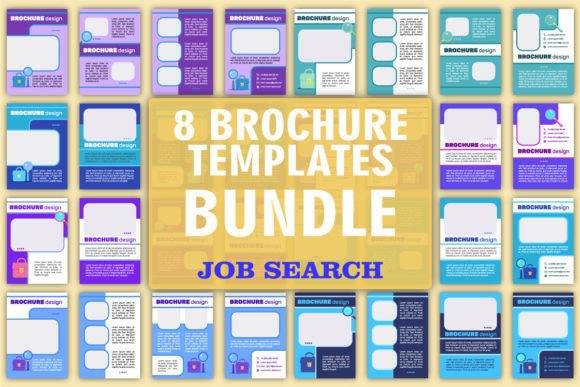
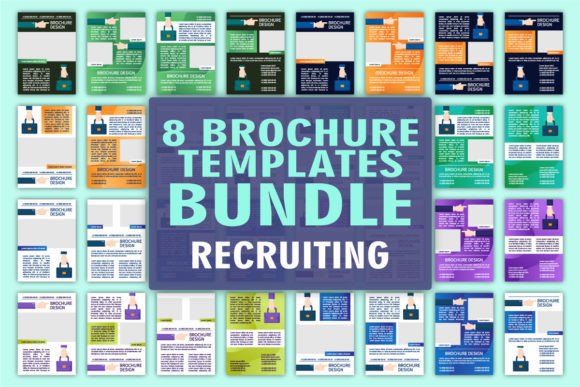
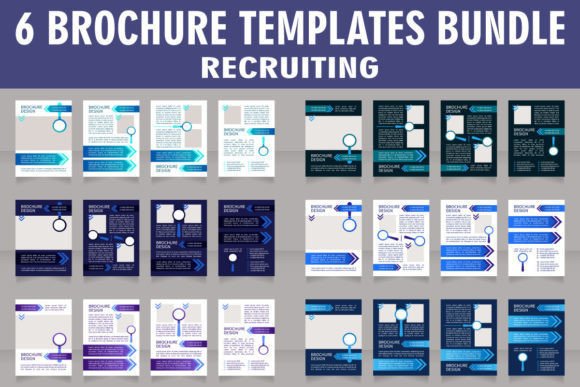
A comprehensive template set for recruitment goes beyond a single file. It is a systematic design solution. Typically, such a collection, like the referenced Employee Searching Brochure Template Set, includes a variety of layouts tailored to different stages of the recruitment funnel. You might find a sleek, eye-catching flyer for social media promotion, a detailed multi-panel brochure for career fairs, and a clean, formal report-style layout for internal stakeholder presentations. The vertical poster template set with empty copy space for text is particularly useful for creating quick-turnaround announcements for internal bulletin boards or university campus events.
These resources are often part of a broader premade corporate reports collection. This means the design language—fonts, color schemes, icon styles—is consistent across all your business documents. When a candidate sees your recruitment brochure, your annual report, and your company newsletter, they perceive a unified, professional brand. This consistency builds trust and credibility before a candidate even steps into an interview.
Key Technical Specifications and Flexibility
The practical utility of these templates is heavily dependent on their technical design. A high-quality collection provides files in multiple product file formats such as EPS, SVG, PNG, JPEG, and AI. This multi-format approach is crucial for different users and applications.
- EPS and SVG are vector formats. This means graphics can be scaled to any size—from a small web icon to a large billboard—without losing resolution or quality. This is essential for printing materials of varying sizes.
- AI files are native to Adobe Illustrator, offering the deepest level of customization for professional designers who need to alter core elements.
- PNG and JPEG are raster formats useful for quick digital use, such as uploading to a website or a social media post, especially when the user may not have access to vector editing software.
The description of editable flyer paper pages highlights the user-friendly nature. True template sets are not static images; they are layered files where text boxes, image placeholders, and graphic elements are separated. You can change the text, replace photos, and adjust colors without needing to redesign the entire layout from scratch. This empowers HR professionals, recruitment coordinators, or small business owners to produce high-quality materials independently.
Practical Applications in Real-World Recruitment
The application of these templates spans the entire recruitment workflow. Consider a tech startup needing to attract software developers. They can use a dynamic brochure template from the set to create a piece that not only lists requirements but visually communicates company culture through modern design elements, spaces for team photos, and icons representing tech stacks. This brochure can be distributed digitally on LinkedIn, printed for a niche tech conference, and adapted into a shorter flyer for a university hackathon.
Another common use case is for internal mobility programs. Large corporations often seek to fill roles internally before external advertising. An editable flyer paper page from the collection can be quickly customized to announce an open managerial position within the company, using the approved corporate color palette and logo, ensuring the announcement feels official and encouraging qualified internal applicants.
Benefits Beyond Time Savings
The immediate advantage is clear: significant time and cost efficiency. No need to commission a designer for every new job opening or recruitment campaign. However, the benefits extend further.
- Brand Reinforcement: Every recruitment material becomes a brand ambassador. Consistent use of professionally designed templates strengthens brand identity in the job market.
- Message Consistency: When all materials for a specific role—from the job ad to the interview follow-up—share a design family, it presents a coherent and organized candidate experience.
- Scalability: For organizations hiring for multiple roles simultaneously, templates allow for the parallel production of all needed materials without design bottlenecks.
- Accessibility: Non-design staff can produce work that meets professional standards, democratizing the creation of important business documents.
The mention of vector brochures infographics templates within such a collection is a specific boon for complex roles. An infographic within a brochure can visually map career progression paths, breakdown salary and benefits packages, or illustrate the team structure a candidate would join. This makes complex information digestible and engaging.
Considerations for Selecting and Using Template Sets
While a universal brochure design template set offers immense value, users should approach selection and use with a few considerations in mind. First, assess the true customizability of the elements. Can you change the core color scheme to match your brand, or are you locked into the template's colors? Second, check the compatibility with the software your team uses. Having AI files is great if you have Adobe Illustrator, but if your team uses Canva or PowerPoint, ensure formats like SVG or high-resolution PNG are included and are easily importable.
The promise of new graphics every week and a subscription model indicates a living resource. This is valuable for staying current with design trends—modern, clean layouts versus more traditional styles. However, it also means the initial set is not static; it can grow to include templates for new recruitment scenarios, like virtual career fair banners or podcast episode graphics for talent attraction. Subscribing keeps your toolkit fresh.
Ultimately, the goal is to enhance communication. The content you place into the empty copy space for text remains paramount. The template provides the visual framework, but the text must be compelling, clear, and inclusive. The design should elevate your message, not distract from it. A well-chosen template set for employee searching removes a major technical barrier, allowing your team to focus its energy on crafting the message that will attract the right talent.
Integration into a Modern HR Toolkit
Today's HR and recruitment functions are increasingly strategic and marketing-oriented. The tools they use must support that shift. A professional Employee Searching Brochure Template Set is not just a collection of graphics; it is a communication platform. It enables the recruitment team to operate with the agility of a marketing department, quickly responding to market opportunities and talent shortages with polished, on-brand materials.
From the hobbyist running a small business needing to hire their first employee, to the university researcher recruiting for a lab team, to the large corporation managing a global hiring drive, the need for effective, attractive recruitment communication is universal. Leveraging a structured, customizable, and professionally designed template collection transforms this often-ad-hoc task into a standardized, scalable, and impactful component of your overall talent strategy.