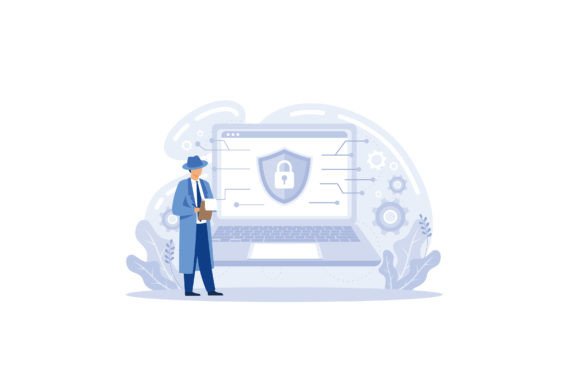
Visual Heroes: Simplifying Cybersecurity with Characters
At first glance, Cyber Security Concept with Characters might seem like a niche design trend. In reality, it’s a powerful communication tool that transforms abstract, often intimidating technical ideas into relatable and engaging visual stories. By personifying cybersecurity principles—like firewalls, encryption, or threat detection—through illustrated characters, creators can make complex topics accessible to everyone.
Why Character-Driven Cybersecurity Visuals Work
The core challenge in cybersecurity communication is bridging the gap between expert knowledge and public understanding. Technical diagrams and jargon can alienate non-specialist audiences. Introducing characters solves this. A friendly "Firewall Guardian" character blocking malicious bots, or a diligent "Data Shield" character encrypting information, creates an immediate emotional and intellectual connection. These characters act as visual metaphors, making the function of a security protocol clear without a lengthy manual.
This approach is not just about simplification; it’s about humanization. It frames cybersecurity as a proactive, heroic effort rather than a reactive, scary technical field. For marketers, educators, and bloggers, this shifts the narrative from fear to empowerment, which is far more effective for driving engagement and encouraging safe practices.
The Creative Palette: Styles and Applications
The versatility of Cyber Security Concept with Characters lies in its adaptability to countless styles and formats. The flat vector illustration style, with its clean lines and bold colors, is particularly effective because it ensures clarity and scalability across different media.
- Web Banners & Hero Images: A dynamic scene with a character team—like a "Phishing Net" character catching suspicious emails and a "Patch Patrol" character fixing software vulnerabilities—can instantly convey a website’s security ethos or a product’s benefits.
- Infographics: Characters can guide the viewer through a step-by-step process, such as secure login procedures or multi-factor authentication, making the infographic both informative and narratively compelling.
- Educational Materials: For trainers and educators, character series can explain different threats (e.g., a "Ransomware Bandit" character) and defenses, creating memorable learning aids for employees or students.
- Branding & Marketing: Small businesses can develop a unique security mascot to build trust with their clients, showing they value protection in a friendly, approachable way.
Adapting the Concept for Your Audience and Goals
The key to success is tailoring the character’s design and story to your specific audience and context.
For a corporate audience, characters might be more professional and team-oriented, emphasizing collaboration and robust system defense. Think of a coordinated squad of characters representing different security layers. For a general public or consumer audience, characters should be warmer, perhaps even playful, focusing on individual actions like creating strong passwords or recognizing scams. A "Password Protector" character crafting a complex key could resonate strongly here.
Freelancers and designers can use these assets to quickly produce client work. With fully editable files—including SVG, AI, EPS, and PNG formats—you can seamlessly integrate characters into larger layouts. The RGB color mode ensures vibrant displays online, and easy scalability means one character design can work for a mobile app icon and a large conference backdrop without losing quality. The ability to easily change colors allows for quick adaptation to different brand palettes or to create thematic variations (e.g., using red tones for alert scenarios, blue for secure states).
Practical Inspiration and Project Ideas
Move beyond a single illustration. Consider building a visual system.
- Create a Character Universe: Develop a family of characters for different threats and solutions. This provides a cohesive library for a sustained campaign or educational series.
- Animate Key Actions: Using the scalable vector source files, animate a character’s action—like a "Virus Hunter" character quarantining a malware file—for short explainer videos or animated infographics.
- Design for Specific Platforms: Adapt the composition for different spaces. A vertical layout with a character looking up might work for a smartphone banner, while a horizontal scene with multiple characters fits a desktop hero image.
- Contextualize with Real Scenarios: Place your cybersecurity character in a relatable environment, like a home office or a shopping website checkout page, to directly show the application of the security concept.
Maintaining Clarity and Originality
While characters add creativity, the primary goal is clear communication. Keep the character’s purpose unmistakable. Their design, name, and action should directly reflect the cybersecurity concept they represent. Avoid over-complicating the design; the flat vector style inherently supports this clarity.
For originality, blend the universal symbolism of cybersecurity with your unique visual voice. Perhaps your "Encryption Guardian" uses a specific visual motif from your brand, or your style leans towards a certain aesthetic—geometric, rounded, or minimalist. The editable nature of the files supports this customization. Remember, consistency across your character set in terms of style, proportion, and color hierarchy will make your visual narrative stronger and more professional.
Ultimately, Cyber Security Concept with Characters is more than an asset pack; it’s a methodology for visual thinking. It empowers creators, educators, and businesses to tell the essential story of digital protection in a way that is not only understood but remembered and acted upon. By giving abstract concepts a face and a role, you build a bridge of understanding that turns audience awareness into informed behavior.