The Artistic Engine: How Illustration Systems Power Modern Creativity
In a digital landscape saturated with content, visual communication has become the universal language. For designers, developers, startups, and agencies, the pressure to create compelling, original visuals quickly is immense. Enter the concept of curated illustration systems—like the Genius Atom Education and Science series—which are not merely collections of images, but foundational tools designed to accelerate and elevate creative work. These systems represent a significant evolution in how we approach graphic design, blending artistry with utility to meet the demands of modern projects.
Beyond Single Images: Understanding Illustration Systems
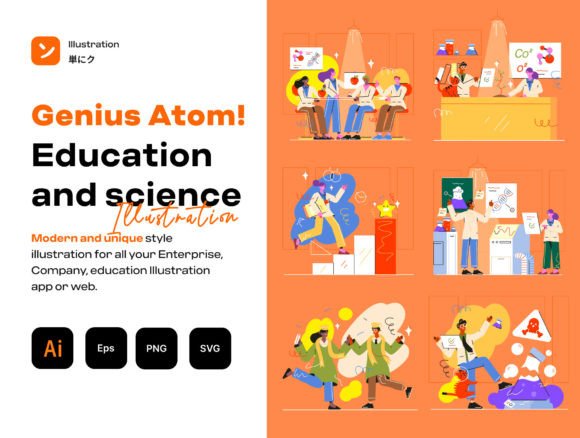
An illustration system is a cohesive library of visual assets built around a consistent style, theme, and set of design principles. Unlike a random assortment of stock graphics, a system like Genius Atom Education and Science is crafted as a unified family. Each "atom"—the individual illustration—shares core DNA: similar color palettes, line weights, shape languages, and stylistic flourishes. This consistency is its superpower. When you use multiple illustrations from the same series in a website, a slide deck, or a social media campaign, they work together harmoniously, creating a professional and polished visual narrative without the designer needing to painstakingly craft each element from scratch.
The "large-style" and "great shapes" mentioned are key attributes. Large-style often refers to illustrations that are bold, clear, and impactful, even at smaller sizes or in busy interfaces. The "great shapes" imply a thoughtful, geometric, or organic foundation to the artwork that makes it versatile and easy to integrate into various layouts. This is design thinking applied to art: the illustrations are engineered for reuse and adaptation.
The Core Purpose: Speed, Consistency, and Creative Freedom
The primary purpose of such a system is tri-fold. First, it dramatically speeds up the design process. A designer can select a pre-made, high-quality illustration that fits their concept instead of spending hours drawing one. This is crucial in fast-paced environments like startups or agencies where time is a direct cost.
Second, it guarantees visual consistency. Maintaining a uniform look across a website, mobile app, and marketing materials is a classic challenge. An illustration system acts as a pre-defined visual style guide, ensuring that every graphic element aligns, reinforcing brand identity and user experience.
Third, and perhaps most importantly, it provides a foundation for creative freedom. Rather than starting from a blank canvas, designers start from a high-quality asset. They can focus their energy on customization, layout, and message—the creative and strategic parts of the work—instead of the foundational rendering. It’s akin to a musician using a well-recorded backing track to focus on their performance.
The Significance in Modern Work and Business
In today’s ecosystem, visual content is a business asset. For a startup launching a product, compelling illustrations on a landing page can explain complex ideas, build trust, and convert visitors. For a design agency, having a ready-to-use, elegant system allows them to prototype client ideas rapidly, showcasing possibilities without a huge upfront investment in custom illustration. Developers, who may not have deep design skills, can integrate professional-looking graphics into their user interfaces (UI) to enhance usability and aesthetic appeal.
The specific theme of "Education and Science" highlights another layer of significance. Illustrations in this niche must convey concepts like learning, innovation, research, and technology in an accessible and engaging way. A well-crafted system provides metaphors and symbols (think of atoms, brains, books, rockets) that instantly communicate these themes to a broad audience, overcoming language barriers and simplifying complex subject matter for infographics or educational materials.
Practical Relevance Across Projects
The application list—social media, website UI, Mobile UI, infographics, posters, Landing pages—is not just a feature set; it’s a map of modern digital communication.
- Social Media & Posters: Here, the large-style illustrations grab attention in crowded feeds and physical spaces. Their clarity ensures the message is understood quickly.
- Website & Mobile UI: In user interfaces, illustrations guide users, explain features, and add emotional texture. Consistent illustrations from a single system create a seamless journey from web to mobile app.
- Infographics: This is where an Education and Science system shines. Complex data about growth, processes, or scientific concepts can be broken down into a sequence of intuitive, beautiful illustrations from the same family, making the infographic both informative and visually cohesive.
- Landing Pages: A high-converting landing page often uses visuals to tell a story. A series of illustrations can narrate the problem, the solution, and the benefit without a word, speeding up user comprehension and decision-making.
Clarifying Common Misunderstandings
A common assumption is that using pre-made illustrations is "less creative" or results in generic work. This is a misunderstanding. Professional illustration systems are starting points, not end points. Their value lies in how they are used. A skilled designer will adapt, combine, and contextualize these assets to create something unique. Another misconception is that they are only for non-designers. In reality, even expert designers use such systems to bypass repetitive tasks, focusing their expertise on higher-level composition and concept development. The tool doesn’t replace creativity; it fuels it by removing friction.
It’s also important to clarify that these are not typically "clip art." Clip art is often simple, generic, and stylistically inconsistent. A modern illustration system like Genius Atom is crafted with a specific, sophisticated aesthetic and technical quality suitable for professional, commercial use.
Building a Broader Understanding: The Ecosystem of Design Assets
Viewing illustration systems as isolated products misses the bigger picture. They are part of a growing ecosystem of design assets that includes icon sets, font families, UI component kits, and template libraries. This ecosystem acknowledges that in the modern creative workflow, time is the scarcest resource. By providing high-quality, interoperable parts, these assets allow creatives and businesses to assemble professional outcomes faster and at scale.
This fits perfectly into the currents of modern life, education, and technology. In education, teachers and content creators can use such illustrations to make digital learning materials more engaging. In daily creative activities, a hobbyist building a blog can achieve a professional look. In technology, the push for better UX/UI design makes accessible, high-quality visuals a necessity, not a luxury.
Examples in Action
Imagine a tech startup creating an app for science students. They might use an atom illustration from the Genius Atom system as the app icon. On the landing page, they use a sequence of illustrations showing a student reading (from the "Education" side), then conducting a virtual experiment (from the "Science" side). Within the app’s UI, illustrations guide the user through different modules. All these visuals, though used in different contexts, share a common style, making the brand feel solid, trustworthy, and well-designed. The startup saved weeks of illustration work and gained a consistent visual voice.
Or consider a design agency pitching a rebrand for a university. They quickly mock up a new website homepage using illustrations from the system to represent different faculties—a bold shape for engineering, a thoughtful composition for humanities. The client instantly sees the potential for a modern, unified visual identity across all departments.
The Enduring Value: Quality as a Catalyst
Ultimately, the value of a beautifully crafted illustration system lies in its role as a catalyst. It catalyzes speed by reducing production time. It catalyzes quality by providing a high baseline of artistic merit. It catalyzes consistency by offering a built-in style guide. And it catalyzes creativity by freeing mental space for concept and strategy. For anyone involved in creating digital experiences—whether a seasoned designer at an agency, a developer at a startup, or an educator building online courses—these systems are more than just pictures. They are the artistic engines powering the visual storytelling that defines our digital world, turning complex ideas into clear, engaging, and beautiful communication.